

How To Install Hitch Pin And Clip
Written by G.L. Huyett Marketing Department on 07/22/2020 with 0 comments
Hitch Pin Clip Features
What is a hitch pin clip?
Hitch pivot clips refer to a wide range of fasteners used to prevent hitch pins from becoming dislodged from their intended application. Whether securing trailer hitches or agricultural implement components, hitch pivot clips are an important safety measure out that significantly reduces the risk of equipment breaking free and causing catastrophic impairment.
Most hitch pin clips tin can exist quickly installed and reused, while others require tools for installation and are intended for single use. Careful consideration of what retainer to use should exist made when deciding on the application blueprint. Then an engineer should expect at available application standards, fabrication, materials and suitable uses when choosing an advisable hitch pin clip solution.
Take a expect below at some of the more commonly used hitch pivot clips to meet which one best suits your application.
Hitch Pin Types
What is a bridge pin?
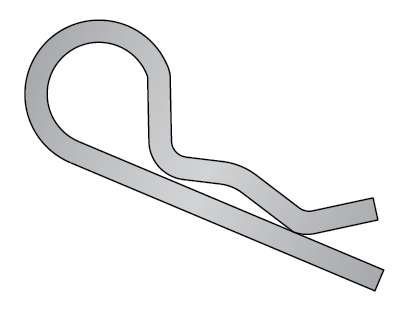
Bridge pins are the most common mating function to clevis and hitch pins. They are available in steel zinc and stainless steel for added corrosion resistance. These pins are easy tethered to forbid hardware loss.
Common Names: Hitch Pin Prune, Pilus Pin Cotter, Cotter Key
Applicable Standards: None known.
Fabrication: Wire formation. Part requires specialized tooling. Estrus treatment for jump tempering.
How to Identify: Manufacturer number or utilise nominal wire diameter x total length.
Where tin can bridge pins exist used? Bridge pins are a great retaining solution for drilled hole applications. This includes nearly any variety of hitch pins also equally latches on hitch couplers. Beneath is an case of two bridge pins fastened in a drilled pin. Span pins can also be secured using cable tethers to prevent loss.
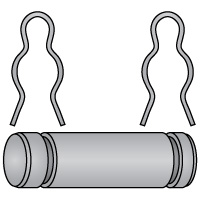
Benefits of a bridge pin: Bridge pins are easy to remove, are reusable, and more heavy duty than a cotter pin. The ring like end serves equally a handle for removal and installation.
What is a double‑loop pin?
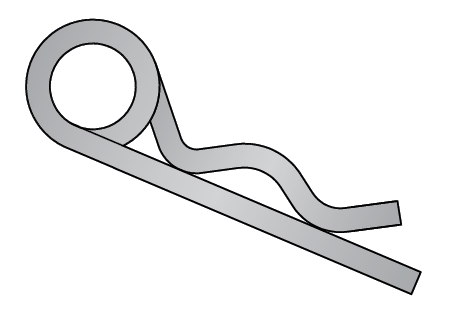
Double loop pins are the heavy duty version of a span pivot that uses a double loop to distribute stresses evenly. They terminal longer and possess a wider application range.
Common Names: Bridge Pin, Ring Pin, Heavy Duty Span Pivot
Applicable Standards: None known.
Fabrication: Wire formation. Function requires specialized tooling. Heat handling for spring tempering.
How to Identify: Manufacturer number or use nominal wire bore 10 full length.
Where should double‑loop bridge pins exist used? A double‑looped bridge pin can exist used anywhere standard bridge pins are desired. They piece of work exceptionally well in drilled hole applications such as those found in hitch pins, clevis pins, and trailer couplers.
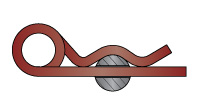
Benefits of double‑loop span pins: Double‑loop span pins boast a longer life bridge and are well suited for very high employ applications. The double‑looped band of the pin provides increased spring tension for more than clamping force than standard span pins. Double‑loop pins can be secured using cable tethers to preclude lost hardware.
What is a lock pin?
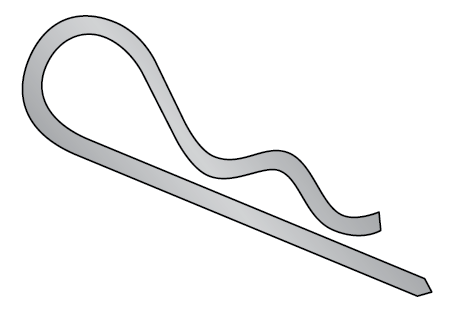
The only pin in this category manufactured to a specification (AA55487). These stainless steel pins come in standard and variable versions.
Mutual Names: Lock Pin, AA55487 lock pivot
Applicable Standards: AA55487. This specification used by the aerospace industry.
Fabrication: Wire formation. Part requires specialized tooling. Heat treatment for spring tempering.
How to Identify: Limited size availability. Each wire diameter has a specific length.
Where are locking span pins be used? Lock pins are ideal for drilled, untapped pigsty applications in armed services and aerospace environments. Their extended and beveled leg provides improved hole orientation as well as increased achieve.
Benefits of lock pins: Lock pins are crafted from 316 stainless steel for enhanced corrosion resistance in extreme environments. These reusable pins characteristic an extended leg with a chamfered end for improved pigsty orientation. The large ring‑like loop allows for the addition of a tether to minimize hardware loss.
What is a grip prune?
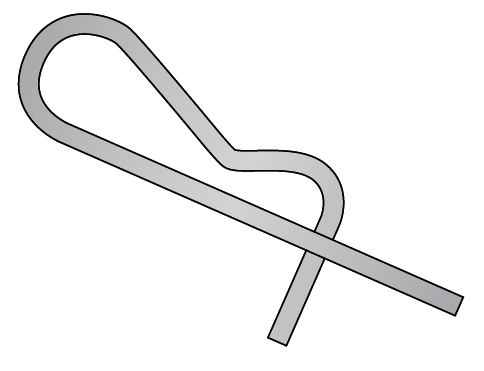
Grip clips' unique design features a bent leg that locks information technology into place. As this pin is inserted into the mating pin, the leg snaps over the mating pivot'south tail, providing additional security. They are ideal for light to medium duty applications.
Mutual Names: Grip Clip, Twist Clip, Self‑locking Pin
Applicative Standards: None known.
Fabrication: Wire formation. Office requires specialized tooling. Estrus handling for spring tempering.
How to Identify: Merely four common sizes available. Identify past wire bore 10 length.
Where should grip clips be used? Grip clips are designed for in pigsty applications such equally those constitute in hitch pins, clevis pins, and certain couplers, where a locking style pin is desired. Aptitude leg snaps over mating pivot to lock in place. Intended for light to medium duty applications.
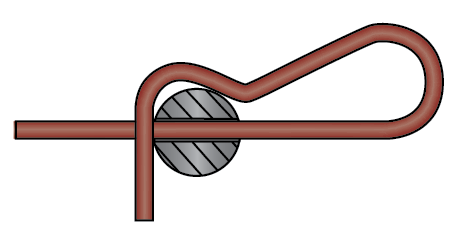
Benefits of grip clips: Grip clips are reusable and present a aptitude leg that snaps over a mating pin'south tail. This significantly reduces the chances of the clip backing out of its pigsty. Grip clips can be secured by attaching a cable tether to the band like loop at the terminate of the clip.
What is a hair pin?
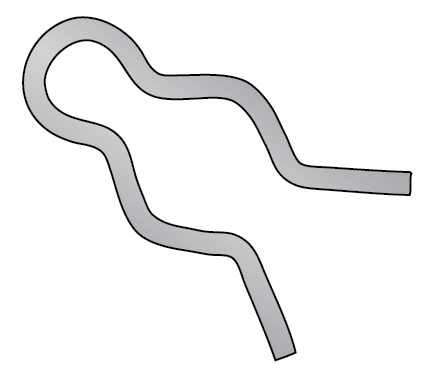
Hair pins operate similar to bridge pins. Notwithstanding, they are intended merely to be used in grooved applications.
Common Names: Pilus Pin Prune, Hitch Pin Clip, Retaining Pin
Applicable Standards: None known.
Fabrication: Wire formation. Part requires specialized tooling. Heat treatment for jump tempering.
How to Identify: Manufacturer number or apply nominal wire diameter x total length.
When should hair pins be used? Pilus pins should be used in medium duty and more specialized retention applications. They are purposefully designed to retain grooved clevis pins and headless pins, as well as any other pivot that uses grooves for attachment.
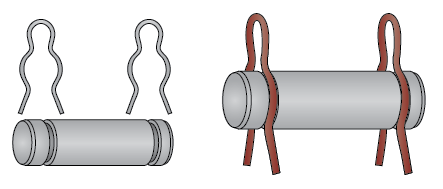
What are the benefits of hair pins? Hair pins are reusable, elementary to install, and can fit a wide range of pin diameters. They are best suited for grooved applications and characteristic a high shoulder to provide increased contact area.
What is an eastward‑clip?
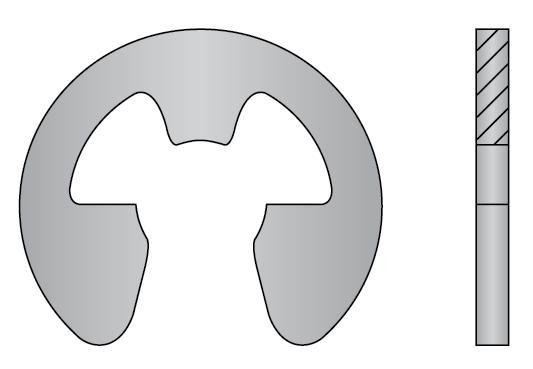
E‑Clips are stamped clips featuring three prongs that yield high thrust load chapters. First-class for deep grooved applications where lateral motion is present.
Common Names: E‑Clip
Applicable Standards: None known.
Fabrication: Stamped role.
How to Place: Round clip with three inwards facing tabs.
Where can eastward‑clips be used? E‑clips are most ordinarily found in precision, grooved pin applications to prevent wheels, bearings, or hub assemblies from rotating off the stop of the beam.
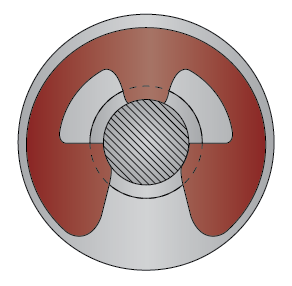
What are the benefits of e‑clips? E‑clips can withstand greater thrust loads than wire retaining rings and are great for applications subjected to high lateral forces. They can also be installed using automatic installation tools for increased efficiency in loftier volume operations.
What is an 10‑ring?
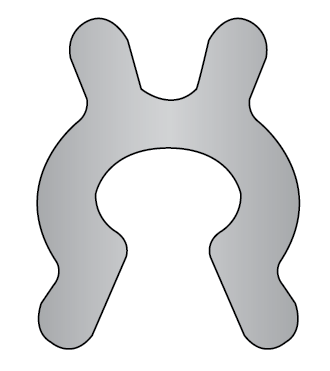
X‑rings are an externally applied retainer that is "pinched" into the groove of a shaft or pin using pliers. Suitable for automated environments due to their depression profile.
Common Names: Crimp Ring Retainer, Snap Band, Compression Ring, Clinch Ring
Applicative Standards: None known.
Fabrication: Stamped role.
How to Identify: Sized for a standard retaining ring groove. Size is identified by the shaft on which the office is practical.
Where should ten‑rings be used? Ten‑rings are used on grooved shafts where removal using mutual pliers is a consideration. Ten‑rings are single use and should exist replaced when removed from their mating part.
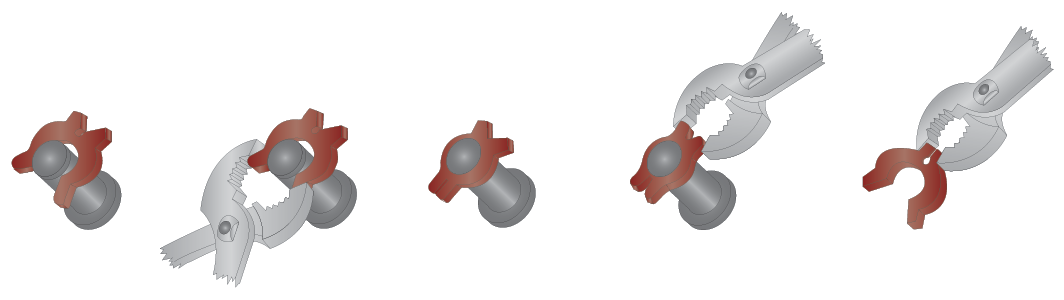
What are the benefits of x‑rings? X‑rings are simple in design and easily installed using standard pliers. Their heavy construction and zinc finish provide strong memory and corrosion resistance.
What is a tether?
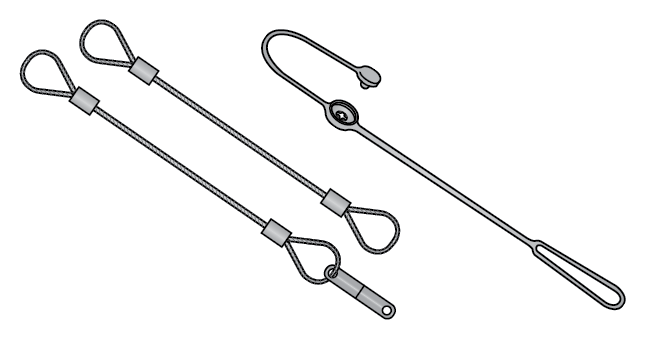
Tethers, also chosen cablevision tethers or lanyards, are a nylon, plain steel cable or nylon coated wire cable used to adhere a pin to its mating office or application to forbid loss.
What do tethers practise? Only put, tethers preclude separation of the pivot from the prune or mating associates.
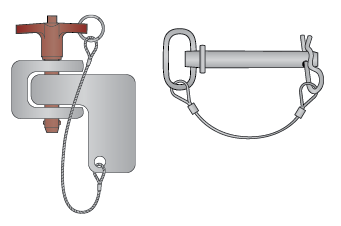
Where are tethers used? Tethers tin be used anywhere there is a need to reduce the risk of losing hardware, parts, or tools. They are near commonly used to attach hitch pins to couplers or hitch pivot clips to hitch pins.
Categories: bridge, clip, double-loop, due east-clip, grip, pilus, hitch, hitch pin, lock, pin, tether, x-band

Source: https://www.huyett.com/blog/hitch-pin-clips
Posted by: adkinsarsiditholen.blogspot.com
0 Response to "How To Install Hitch Pin And Clip"
Post a Comment